Open, Adaptive Statistics
& Data Science Textbooks

High-quality teaching and learning digital textbooks and resources.
Created by subject-matter experts, customised by expert educators,
improved everywhere to benefit everyone.

The unsolved problem

Existing textbooks aren’t a match
for a complex, rapidly changing world.

A global community of educators and authors are committed to developing a flourishing ecosystem of open, accessible textbooks and educational resources to make high-quality teaching and learning accessible to all.

But from the moment they’re created, even the best textbooks need adaptation, updating and iteration to meet the needs of individual educators–and their courses and students.

New & Emerging Technologies

Core concepts stay the same, but how and where they’re applied are constantly changing. As a result, existing textbooks and resources are quickly out of date, misaligned, or only stay relevant by failing to address new technologies and innovation altogether.

Variable Contextual Realities

Teaching and learning happen better when resources are relevant and accessible. But existing textbooks can’t easily adapt into new cultural or language contexts; incorporate different examples, datasets or tools; or account for limited access in low-resource contexts.

Different Strengths and Weaknesses

Even within a single course, students have varying strengths and weaknesses. But existing textbooks are one-size-fits-all, unable to flex to serve students with targeted resources, low-stakes assessment, or additional support to help them learn better.

The solution

Open, adaptive educational resources:
A great leap forward for teaching and learning

IDEMS is introducing a living library of high-quality open statistics and data science textbooks (and supporting teaching, learning and assessment resources) that can be tailored to any course, context, and/or student. Educators develop entirely new textbooks without starting from scratch–or creating an isolated copy that requires constant upkeep.

With IDEMS’ Open, Adaptive Statistics & Data Science Textbooks, educators can:

  • Easily recombine existing open textbooks and resources to shape new versions for unique courses and students
  • Swap or add new examples, datasets, or assessments
  • Translate an entire textbook or section in real time.
  • Decide what delivery format works best for a unique context and students
  • Contribute to the ongoing development of an ever-expanding, peer-reviewed textbook and resource library

New textbook and resource versions developed out of our system stay connected: your adaptations and improvements help other educators and authors, and theirs help yours.

How it works for:

Educators

Easily create the precise textbook and supporting resources for your course and your students, from an ever-expanding suite of high-quality open textbooks and educational resources.

Educator-Authors

Build your own deeply customised textbook out of existing open textbooks foundations, layering in new lessons, resources, and assessments to create an entirely new version. Submit your adapted textbook for community review to earn recognition for your trusted contribution to the open library.

Authors

Extend the value of your textbooks, and understand where and how educators are using them to improve your existing textbooks and to develop entirely new textbooks and resources.

Use cases

Centring educators, empowering local innovation, transforming authoring, teaching and learning

What does that look like in practice?

Meet three educators using Open, Adaptive Statistics & Data Science Textbooks to solve three different problems:

  1. swapping programming language application
  2. splitting one course into several tailored versions, and
  3. entirely reshaping content for a new audience and context.

Each adaptation stays connected to the whole, and benefits everyone else, growing the library instead of forking away from it.

Same Concepts, Different Applications

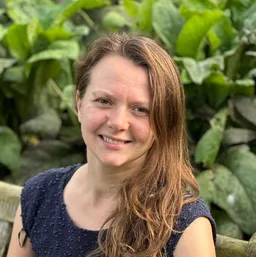
An Introduction to Data Science is Dr. Lily Clements’ favourite textbook, but it uses R and this year she’s teaching her students to code with Python.

Rather than starting from scratch, she creates a new textbook variant. She takes the textbook and replaces R examples with Python, updates code snippets, and tailors the embedded assessments in the existing textbook to develop an entirely new textbook: An Introduction to Data Science with Python.

When she's ready, she shares her adaptation with the community. Following peer review, her textbook is recognised as a curated contribution to the open library. She receives attribution as the author of the adaptation, while the original authors continue to receive credit for the foundation on which it was built.

She is now both an educator and an author, with her peer-reviewed textbook contributing to the continuously evolving open library. Future educators can adopt her version, adapt it for their own contexts, or build on it further – creating a living ecosystem of textbooks that evolves alongside the discipline.

One Course, Multiple Textbooks

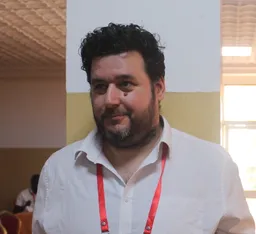
Dr. David Stern is a guest lecturer at Maseno University in Kenya, teaching an Introduction to Data Science for Social Impact course. His students come from diverse academic backgrounds, with varying levels of experience in data analysis, programming, and statistical thinking.

Rather than creating a one-size-fits-all textbook, David builds multiple versions of the same foundational course resource. Each version shares the same core concepts and learning objectives but includes different examples, explanations, exercises, and assessments to support students with different needs.

Students receive materials that better match their needs, while still progressing towards shared learning goals. Over time, these adapted versions become part of a growing library of resources that educators can reuse, refine, and customise for their own learners.

Context-Relevant Examples and Datasets

Statistical Thinking for the 21st Century is a highly regarded open textbook for introducing statistics to beginners. However, its examples and datasets are designed primarily for STEM students in US universities. Professor Roger Stern is preparing a course on statistical analysis of historical weather data for a local Meteorological Office team in Zimbabwe.

Rather than starting from scratch, he adapts the existing textbook by replacing examples, datasets, and tools with materials that reflect the team’s own work and local context. The statistical concepts remain the same, but the team learn through data and problems that are directly relevant to their roles: analysing climate patterns, interpreting historical records, and applying statistical methods to real-world decisions.

Roger’s adaptation transforms an existing open resource into a specialised textbook for a new audience, while contributing a valuable version back to the open library for others to discover, adapt, and build upon.

What people are saying about
Open, Adaptive Statistics & Data Science Textbooks

Statistics becomes much more meaningful when learners can see themselves in the examples. By working with real climate data and problems that professionals encounter every day, we can move beyond teaching statistical methods in isolation and help people develop skills they can immediately apply in their work.
— Dr. Roger Stern, Educator
I got my start by essentially “recontextualizing” some material that someone else had been generous enough to put into the public domain. […] I don’t think I ever would have had the ambition to write a book from scratch, but adaptable open educational materials allowed me to get started and realize that I could write much more than I expected in the beginning.
— Nathan Favero, Author of Statistics Minus The Math
So often people don't inform folks in the OER world (e.g., an OER of mine on number theory and cryptography was being heavily used at a university in Chile, and I only happened to stumble upon that fact by accident!), and while it is perfectly legal, it is such a kindness to share this information.
— Jonathan A. Poritz, Author of Lies, Damned Lies, or Statistics

IDEMS: Where statistics, education,
mathematics and tech meet

UK-based IDEMS is a social enterprise building open, community-owned technology for global impact. Open, Adaptive Statistics & Data Science Textbooks emerge from our understanding of the need for deeply technical educator-centred innovation that supports global collaboration and local adaptation.

IDEMS’ team of mathematical scientists and software engineers bring decades of technical expertise, field-level pedagogical understanding, and direct teaching experience. We work with educators around the world to reimagine how technology can support, rather than replace or marginalise, educators to improve teaching and learning for everyone.

The team includes:

  • Dr David Stern

    Dr David Stern

    Statistics Educator

    Extensive experience in curriculum development and international capacity building. He has served as Director of Project Development for AIMS-NEI, Vice President of the International Association for Statistical Education (IASE), and contributes to international initiatives including ISI, ISLP, and STACK.

  • Dr James Musyoka

    Dr James Musyoka

    Statistics Educator

    Co-founder of the African Maths Initiative, and former lecturer at Maseno University. He is an active member of the international statistics education community and previously served as Vice President of the International Association for Statistical Education (IASE).

  • Dr Lily Clements

    Dr Lily Clements

    Data Scientist & Educator

    Works at the intersection of statistics, open-source software, and data education, developing open educational resources, tools, and courses. She contributes to the international statistics education community and is a member of ISI and IASE.

  • Professor Roger Stern

    Professor Roger Stern

    Placeholder role

    Excepteur sint occaecat cupidatat non proident, sunt in culpa qui officia deserunt mollit anim.

Learn more about IDEMS